


 Round eyeglasses
 Rectangular eyeglasses
 Pilot eyeglasses
 Geometric eyeglasses
 Butterfly eyeglasses


To make its glasses, Swiss brand Akoni has chosen to work with Japanese artisans, renowned for their mastery of exceptional materials and their passion for the smallest details. It all begins in the early 1900s in Fukui Prefecture, a small region of Japan. At the time, local people live mainly off farming. But winters are particularly cold, and snow prevents farmers from working for several months.
A man named Gozaemon Masunaga then has the idea of teaching local people to make glasses so they can work during the winter. He brings in artisans from Osaka to pass on their expertise. Without realizing it, he has just laid the foundations for what will become one of the world’s most renowned eyewear industries.
Over the generations, techniques are refined, and the Fukui region, particularly the city of Sabae, becomes a benchmark for eyewear. But it is in the 1980s that Japanese artisans transform the history of eyewear.

Innovation in titanium eyewear.
Today, titanium is widely used in high-end frames. At the time, however, working with this material was a real technical challenge. The metal is exceptionally strong but difficult to shape precisely. Japanese artisans develop new techniques to turn it into frames that are slim, lightweight, and sturdy.
This breakthrough will have a lasting impact on the world of eyewear, and it is precisely this heritage that catches the attention of a young Swiss eyewear house.
Akoni is founded in 2020 with a guiding vision: to create glasses that combine the precision of Swiss watchmaking with the excellence of Japanese craftsmanship.
To bring its designs to life, the house entrusts their production to Japanese artisans, not only for their mastery of titanium but also for their philosophy known as “Shokunin.” This approach to work involves continually refining one’s craft, even after years of experience, and it can be seen in the smallest details of Akoni frames.
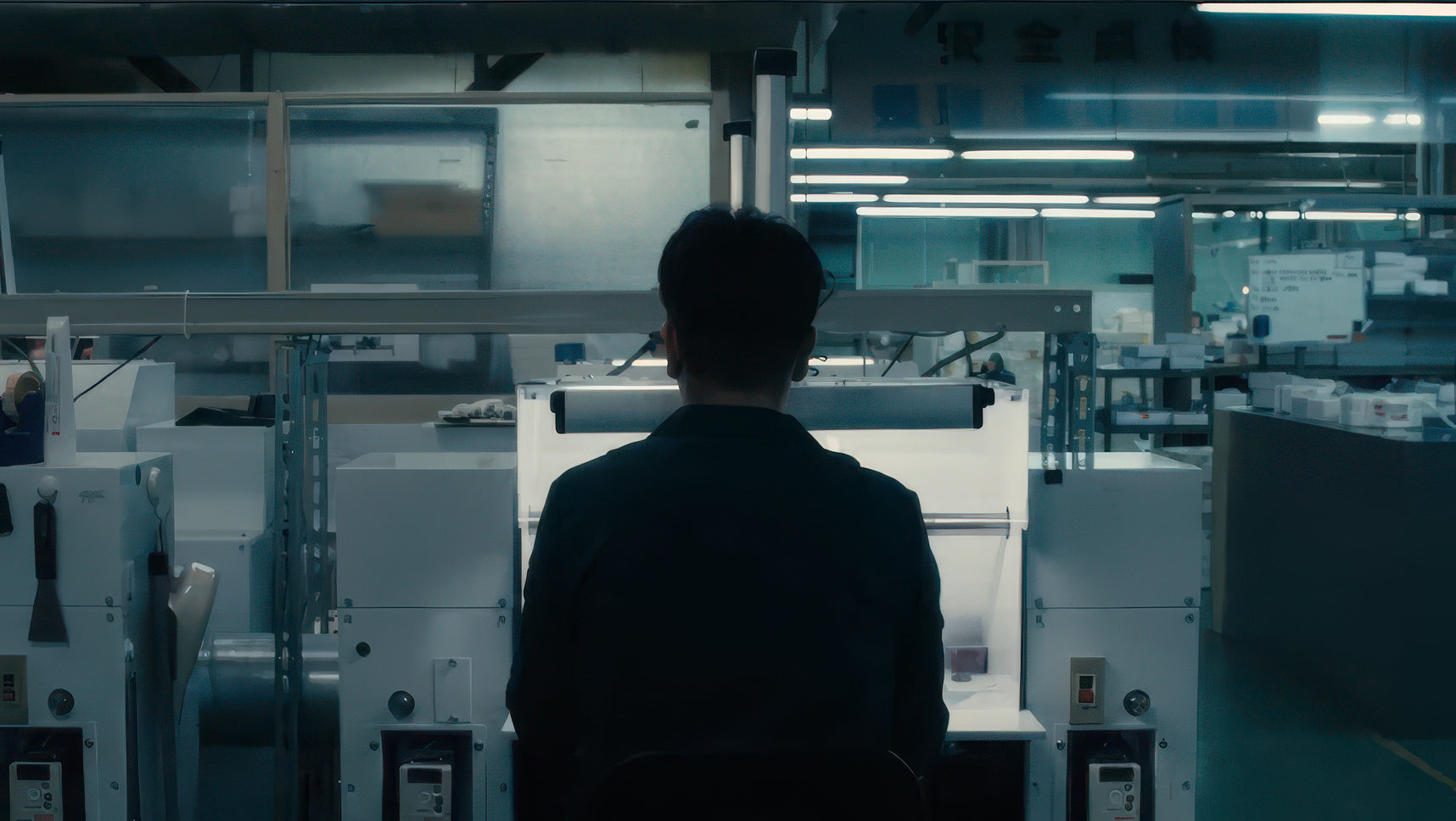
But why spend twice as long making a pair of glasses?
In Japan, some glasses take longer to make than conventional frames because the acetate must undergo a stabilization phase. This extra time helps improve the quality of the material, how well it holds up over time, and its resistance to warping. It is a detail invisible to the naked eye, but especially important to a frame’s longevity. In addition, on certain models, the nose pads are made of ceramic, a hypoallergenic, lightweight, and durable material. They have fine grooves designed to help them stay in place on the nose.
The house even draws inspiration from Japanese craft techniques such as Kiriko, a traditional art of glass cutting, as well as Japanese woodworking joinery techniques.
Ultimately, what makes Akoni glasses so special is not just their design. It is also more than a century of Japanese craftsmanship and time spent with meticulous care, quietly reflected in every frame.


